Why Do I Keep Rolling My Ankle?
Ankle Anatomy
Your ankle is designed to move in combined patterns to absorb impact from the ground and adapt to a variety of surfaces as you walk and run and change directions. There are muscle groups on all 4 sides of the ankle that control its motion and ligaments on both sides of the joint that limit how far it can move in each direction.
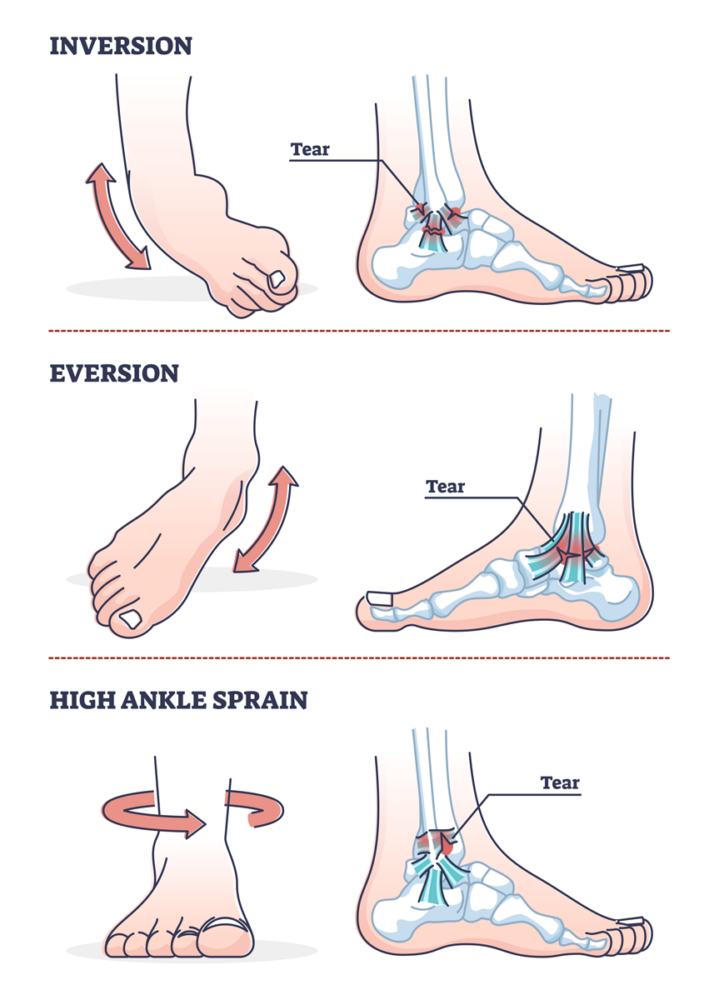
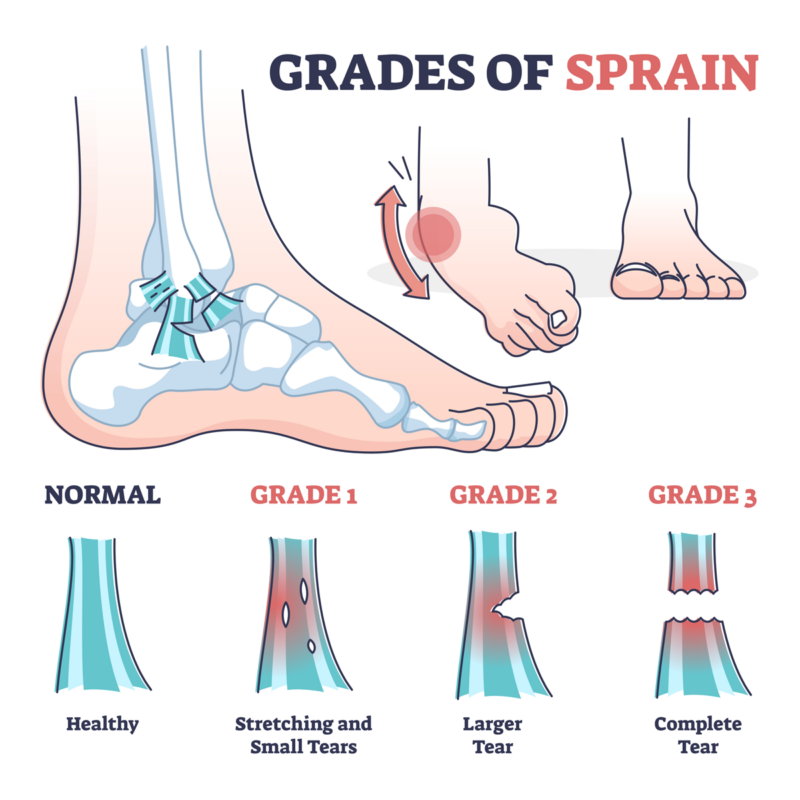
Ankle sprains occur when pressure is applied through the joint past the point the ligaments that support your ankle are able to stabilize, often when suddenly stepping on an uneven surface or changing directions quickly. This is an extremely common injury, with about 1% of the general population reporting a new ankle sprain each year (that is over 2 million people in the United States alone!)
Injury to the outside of the ankle is much more common than the inside due to joint structure and amount of ligament support. While 40-70% of people go on to develop chronic re-occurrence of ankle sprains following an initial injury, it is important to note that only 30-50% of these individuals seek rehabilitative care before returning to their usual activities.
Factors Affecting Ankle Stability
- Ligamentous laxity – when ligaments get overstretched they become generally looser, leading to difficulty controlling excessive motion at the joint (particularly when turning the ankle inward.)
- Joint restrictions – while the ankle may feel looser when turning it inward, it is also very common to develop stiffness in the front of the ankle. Particularly with ankle dorsiflexion, this leads to difficulty moving your knee over your toes as required for sitting, squatting, descending stairs, and walking motions.
- Proprioception impairments – proprioception is our body’s ability to sense where it is in space. Following injury, our brain can have an altered ability to control ankle motion without visual cues.
- Altered muscular control – aside from general muscle weakness, delayed reaction time has been found in the muscles supporting the ankle in response to fast, unexpected movement.
How Can Physical Therapy Help?
- Ankle mobility – early movement is incredibly helpful for a faster recovery, but it is important for this to be done appropriately. Physical therapists can demonstrate techniques to increase pain free range of motion at the joint early on after injury, leading to reduced pain with daily activities.
- Balance and stability – you will complete a progressive program from double leg to single leg exercises utilizing various sensory stimulus, visual cues, and weight shifting to prepare for everyday and sport-specific challenges.
- Assess global movement patterns – the joints of your lower body (low back, hips, knees, ankles) are highly interconnected! If your hip and knee are not supporting you well, your ankle will take on more stress. A comprehensive rehab program will include core, hip, and knee strengthening to disperse forces from the ground and set your ankle up for success as you begin adding in more dynamic movements.
- Plyometric strength – as you build ankle strength and have reduced pain levels, physical therapists will gradually add agility-based patterns to train fast twitch muscle fibers. Over time, your ankle will adapt to this load and be able to maintain its stability with quick or unexpected motions.
Bottom Line
An ankle sprain may feel better before strength, balance, mobility, and control are fully restored. Working with a physical therapist can help you recover safely, address the factors that contributed to the injury, and reduce your risk of future ankle sprains.
References:
-
-
-
-
-
-
-
-